
Into downtown Toronto
About 30 km, and 25 to 45 minutes depending on traffic. A flat $85 by sedan or $110 by SUV, to any downtown hotel address. The UP Express train also runs from Terminal 1 and is cheaper if you are alone with light bags.
Airport guide · Published August 4, 2026
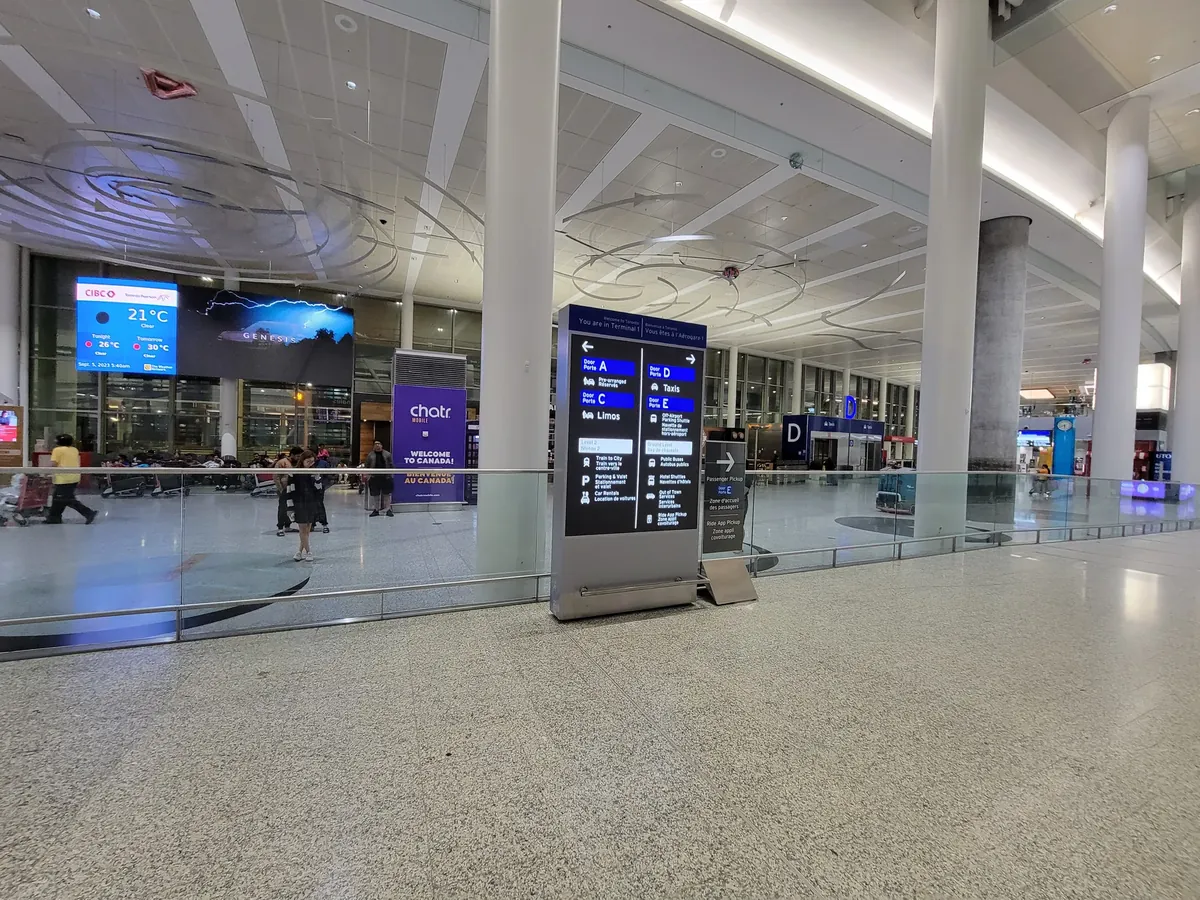
Terminal 1. Every Air Canada flight uses Terminal 1, whether you are flying inside Canada, down to the United States, or overseas. Air Canada Rouge and Air Canada Express use Terminal 1 too, so there is only one building you need to find.
The short answer
Pearson has two passenger terminals, Terminal 1 and Terminal 3. Air Canada sits entirely in Terminal 1. That is true for a short hop to Ottawa, a flight to Florida, and a long haul to London. It is also true for the two smaller brands that fly under the Air Canada name, Rouge and Express. If your boarding pass says Air Canada, head for Terminal 1.
Terminal 3 is where most other airlines operate, including WestJet and Air Transat. People mix the two up all the time, usually because a family member was dropped at Terminal 3 last year for a different airline. The terminal follows the airline, not the destination.
Inside the building
Terminal 1 is big, but it is organised in a simple way. Your gate sits on one of three concourses, and which one you use depends on where you are flying.
| Concourse | Used for | What that means |
|---|---|---|
| Concourse D | Flights inside Canada | Toronto to Vancouver, Halifax, Ottawa and the rest of the country. |
| Concourse E | International flights | Europe, Asia, the Caribbean and everywhere else outside North America. |
| Concourse F | Flights to the United States | These are called transborder flights. You clear United States customs in Toronto before you board. |
You do not need to memorise this. Your boarding pass shows the gate, and the signs inside take you there. It helps to know the shape of the place, though, because a gate change from D to F is a longer walk than a gate change within D.
Leaving Toronto
Check-in is on Level 3, the departures level. Air Canada has staffed desks, self-serve kiosks, and bag drop counters along that hall.
If a car is dropping you off, ask to be taken to Terminal 1 departures rather than arrivals. Departures is the upper roadway. Arrivals is the lower one, and being on the wrong level means finding an elevator with your bags.
Air Canada suggests arriving two hours before a domestic flight and three hours before a flight to the United States or overseas. Check the airline's current advice before you travel, because busy periods can change it.
Landing in Toronto
Arriving is where people get confused, because the walk changes depending on where you flew in from.
Everyone ends up in the same place: the arrivals hall on the ground level of Terminal 1. That is where drivers wait. Our chauffeurs meet passengers at Door A, and the airport pickup desk is 416-231-0443 if you cannot spot the car. There is no charge for waiting after you land, so a slow bag belt or a long customs line does not cost you anything.
If you end up in the wrong building
It happens. Someone drops you at Terminal 3 out of habit, or your connecting flight is on an airline that uses the other building. The fix is the Terminal Link train.
It is free, it takes a few minutes, and the signs inside both terminals point you to it. Allow a little extra time in case you reach the platform just as a train pulls away. If you are connecting from another airline onto Air Canada, plan for that hop rather than assuming your gate is a short walk.
One more thing worth knowing: all Star Alliance airlines use Terminal 1 as well. If you are connecting from Air Canada onto a partner airline like Lufthansa or United, you usually stay in the same building.
After you land
Terminal 1 sits on the west side of Toronto. What the trip looks like depends on where you are headed.
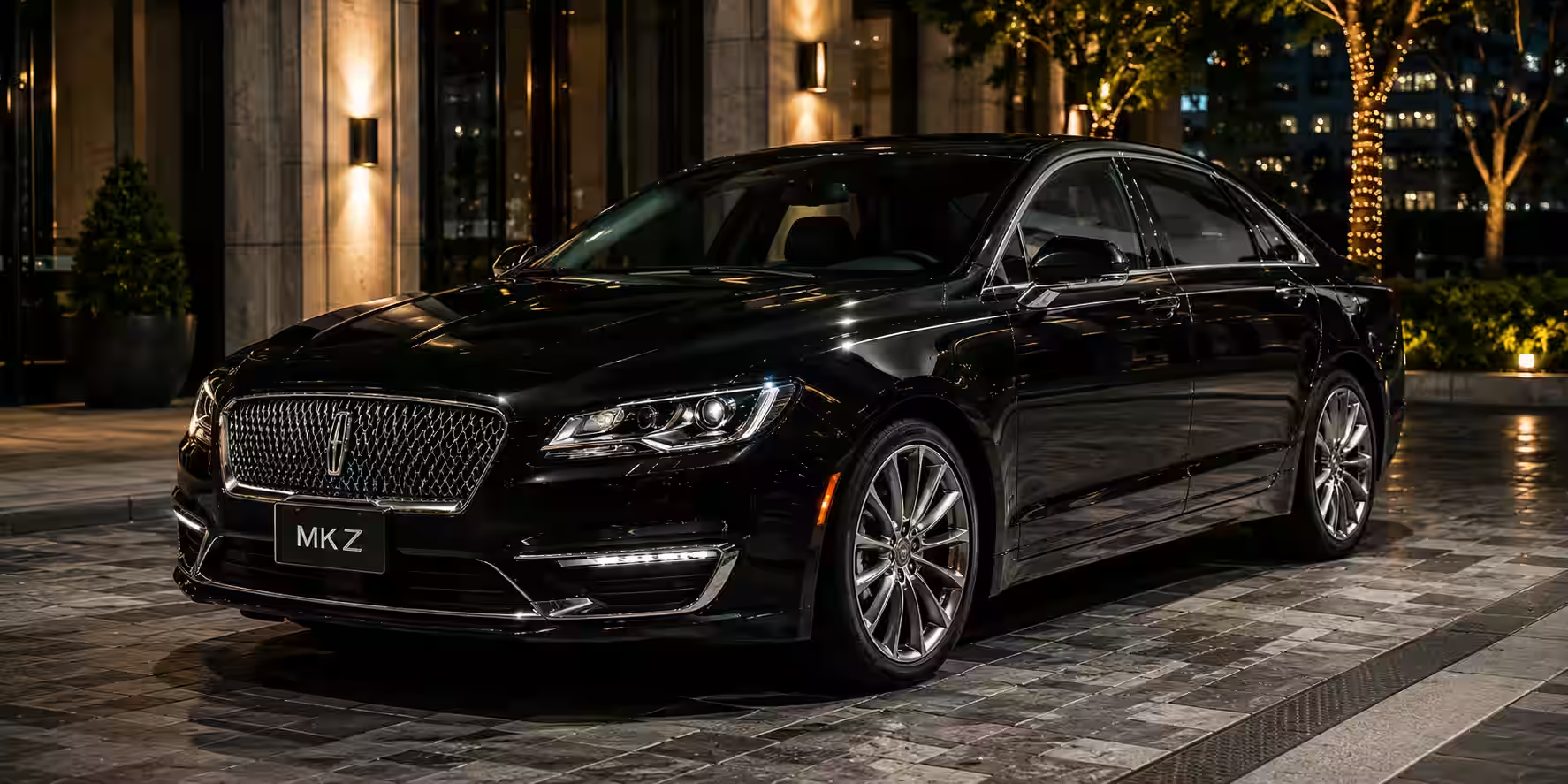
About 30 km, and 25 to 45 minutes depending on traffic. A flat $85 by sedan or $110 by SUV, to any downtown hotel address. The UP Express train also runs from Terminal 1 and is cheaper if you are alone with light bags.
About 130 km down the QEW, usually 90 to 110 minutes. A sedan is a flat $225. This is the trip most visitors book before they even land in Canada.
Mississauga starts at $75 and 112 Ontario cities have a published flat rate. The price is set before you travel and does not change on the day.
All three wait outside Terminal 1. They price the trip in completely different ways, and for some trips the taxi genuinely wins. We compared them honestly.
Questions
Terminal 1. Every Air Canada flight uses Terminal 1 at Toronto Pearson, whether you are flying inside Canada, to the United States, or overseas. Air Canada Rouge and Air Canada Express use Terminal 1 too.
Terminal 1. Rouge flies under Air Canada flight numbers and leaves from the same terminal as the rest of the airline. So does Air Canada Express, the regional service.
In Terminal 1, after customs and baggage claim. You walk out into the arrivals hall on the ground level. Our chauffeurs meet passengers at Door A, and we track the flight so the car is there when you are.
Take the Terminal Link train. It is free, it runs between the two terminals in a few minutes, and it is well signed once you are inside. Allow extra time in case you arrive at the platform just as a train leaves.
Air Canada suggests two hours before a domestic flight and three hours before a flight to the United States or overseas. Check the airline's current advice before you travel, because busy periods can change it.
Your account
Create an account and every trip you book gets counted. When you reach ten, the tenth ride is on us. The account also lets you book in a few taps, look back at past trips, and keep every invoice in one place instead of calling in each time.
Send us your flight number and we will be at Door A when you walk out, on a flat rate agreed before you fly.
7686 Kimber St Unit #18, Mississauga, ON L5S 1E9